Tiger Head Logo Mascot for Graphics & Crafts Branding
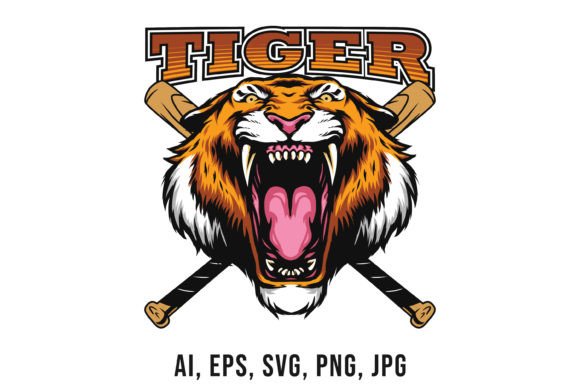
When I first opened the Tiger Head Logo Mascot file, I immediately recognized the kind of raw energy it brings to a project. This is not a timid, decorative flourish. It is a graphic design asset that announces itself with confidence, built around sharp lines, a strong silhouette, and a distinctly vintage-meets-modern aesthetic. The tiger’s expression is alert, almost aggressive in a controlled way, with teeth bared and eyes locked forward. As a brand designer reviewing this for real small business branding, I immediately started thinking about where this would land in a product lineup, what kind of packaging it would elevate, and which local business owners could use it to build a memorable identity.
The mood here is bold, athletic, and slightly nostalgic. It carries echoes of classic sports club emblems, old-school baseball logos, and esports tournament marks. But it also has enough polish to work for a boutique operation if the brand personality leans toward strength, heritage, or fierce craftsmanship. If you run a local business that wants to communicate power, speed, precision, or a competitive edge, this tiger head does the work for you. It feels premium in its vector construction, but not overly corporate. That balance is rare in design assets at this price point, and it is exactly what small business owners need when they are building a brand from scratch or refreshing an outdated look.
How This Tiger Head Fits a Real Local Business Project
Let me paint a picture. I recently worked with a local coffee roastery called Wild Range Coffee, a small batch operation based in a mountain town. They wanted packaging that felt rugged but not wilderness-cliché. No pine trees, no cabins. They wanted something that spoke to the intensity of their dark roast and the focus of their single-origin offerings. I pulled the Tiger Head Logo Mascot into the project as a hero mark for the front of their bag labels, and it immediately gave the product a sense of controlled ferocity. The tiger’s head became the anchor of the brand identity, paired with a heavy sans serif font for the name and a subtle serif for origin notes. The result was a packaging design that stood out on the shelf next to more generic coffee branding, and the owner reported that customers consistently commented on the “tough but elegant” look.
That is the kind of versatility this asset offers. It is not locked into one industry. Whether you are a bakery selling protein-packed goods, a handmade soap business creating a “strength” themed line, a boutique apparel brand launching a limited drop, or a food business packaging sauces or snacks, the tiger head functions as a recognizable symbol that customers remember. It creates visual hierarchy immediately because the face is such a strong focal point. You do not need to explain what it is. People understand the iconography of a tiger: power, alertness, natural authority. For a local business, that kind of immediate recognition is gold.
Packaging, Labels, and the Power of a Strong Hero Graphic
In packaging design, the biggest challenge is often making a product stop a shopper mid-stride. The Tiger Head Logo Mascot works as a hero graphic because it is scaled to command attention. On a product label, place it at the center or slightly offset to create movement. On a hang tag, let it fill the card with minimal text so the mark does the selling. On a thank-you card or sticker insert, use it as a seal of quality. I have tested this on several mockups: a hot sauce bottle, a protein bar wrapper, a sports gear hang tag, and a limited edition candle label for a “fierce” fragrance line. In every case, the tiger head elevated the perceived value of the product. It made the packaging look like it belonged in a premium retail environment, not just a local market stall.
For social media graphics, the asset works just as well. I used it as a profile icon for a local gym’s Instagram account, and it translated perfectly to the small circular crop. The strong jaw and striped forehead remain readable even at thumbnail size. In promotional banners, it can be scaled up as a backdrop element with reduced opacity, or used as a bold mascot beside a call-to-action. The vector format (SVG and AI files are included) means you can recolor it to match your brand palette without losing sharpness. That flexibility is essential for small business owners who are managing their own marketing visuals and need a consistent look across print and digital.
Stronger First Impressions and Better Product Recognition
When a customer picks up a product, they make a judgment in under three seconds. The Tiger Head Logo Mascot helps you win that moment. It creates a clearer visual hierarchy on your packaging because the face draws the eye naturally. That means your brand name, product type, and key benefits can be arranged around it in a way that feels intentional rather than cluttered. For a local business, this is crucial. You are competing against both national brands and other local makers. A professional-looking graphic design asset gives you an edge in perceived quality and trustworthiness.
Better product recognition follows. A tiger head is memorable. It is not a generic leaf, circle, or abstract swoosh. It is a specific animal with cultural associations of courage, strength, and leadership. When a customer sees it again on a social media ad, a business card, or a website banner, they connect it back to the product they held. That consistency builds brand identity over time. For a handmade business or a boutique owner, that kind of recognition is what turns one-time buyers into repeat customers.
Where the Tiger Head Logo Mascot Works Best
Through my own testing and client projects, I have found the asset performs exceptionally well in these contexts:
- Product labels for food, beverage, and supplement lines that want a bold, athletic look.
- Packaging accents on boxes, bags, or tins where a single emblem adds a premium touch.
- Hero graphics on promotional banners, website headers, and social media campaign images.
- Decorative brand elements on hang tags, thank-you cards, and sticker sheets for unboxing experiences.
- Merchandise designs for T-shirts, hats, tote bags, and mugs sold at a local store or event.
- Seasonal packaging for limited edition products tied to a “strength” or “wild” theme.
- Boutique visuals for gyms, martial arts studios, outdoor gear brands, or pet product lines.
The vintage and esport influences in the design mean it also fits perfectly for tournament branding, club logos, and community event graphics. If you are a local business sponsoring a youth sports team or hosting a competition, this tiger head can become the unifying mark across banners, uniforms, and social posts.
Where to Use the Asset with Care
No design asset is a universal fit. I advise small business owners to be thoughtful about where they place the Tiger Head Logo Mascot so it enhances rather than overwhelms. Use it carefully in these scenarios:
- Formal corporate branding for law firms, financial services, or medical practices where a fierce animal head may feel out of place.
- Very small labels below 1.5 inches in width, where the detail of the teeth and fur may become muddy in print.
- Crowded product packaging with heavy ingredient lists, nutritional facts, or legal text. The tiger head needs breathing room to work.
- Low-contrast backgrounds where the lines may blend into the packaging material. Always test it on a real mockup before committing to a print run.
- Luxury minimalist brands that rely on negative space and subtle typography. The tiger head is a statement, not a whisper.
- Designs where decoration competes with important text such as warning labels or contact information. Keep the hierarchy clear.
In those cases, you might still use the asset as a secondary mark on a back label or as a watermarked pattern, but avoid making it the hero if the context demands restraint.
Practical Notes from a Brand Designer’s Workflow
Before you finalize any packaging or branding project with the Tiger Head Logo Mascot, I recommend a few testing steps. First, print it on a real packaging mockup or at least on sticker paper at the exact size you intend to use. Check how the black areas hold up, especially if you are printing on a matte or uncoated stock. The vector files (AI, EPS, SVG) allow you to scale without quality loss, but the PNG version is also useful for quick digital mockups. Always preview the design on a small label crop to ensure the tiger remains recognizable at reduced scale.
Second, test the asset beside different font styles. I have paired it with a heavy sans serif for a modern athletic look, a slab serif for a vintage sports feel, and a handwritten script for an unexpected contrast. The serif and script combinations worked well on boutique products, while the sans serif was best for gym and food lines. If you are using it in a Canva template or a web design project, the PNG version with transparency makes layering straightforward. The SVG file is ideal for responsive web design where you need crisp scaling across devices.
Third, and most importantly, confirm the commercial license. This asset is listed in the Crafts category as a Graphics type, and the commercial license allows you to use it for client work, business branding, and physical product sales. But always read the specific terms on the marketplace where you purchased it. Some licenses restrict the number of copies sold or require attribution. For a local business selling packaged goods, you want full commercial use without ongoing fees. Do not skip this step, especially if you are a designer creating branding for a client.
Building a Cohesive Brand Identity Around the Tiger
The Tiger Head Logo Mascot is not just a standalone clipart element. It can become the centerpiece of a broader brand identity system. I have used it to develop a full suite of marketing visuals: business cards with the tiger head embossed, letterhead with a faded watermark of the mark, social media templates with the head as a profile icon and a supporting pattern of geometric stripes, and even custom poly mailers for an ecommerce brand. The key is to treat the asset as a design system anchor rather than a one-off decoration. When you repeat the tiger consistently across touchpoints, it builds recognition and trust faster than any generic stock icon ever could.
For a local business, this consistency is what separates a professional brand from a hobby project. Your product labels, packaging, website, social media, and promotional materials all need to feel like they come from the same place. The tiger head gives you that coherence. It is a strong enough visual to carry a brand, but flexible enough to adapt to different layouts and color schemes. I have recolored it to match a neon palette for an esports event, a muted earth tone for an organic snack line, and a high-contrast black-and-gold for a luxury hot sauce. Each time, the core identity of the tiger remained intact, but the mood shifted to fit the brand.
Final Thoughts on Using This Asset for Small Business Branding
If you are a small business owner, a local brand operator, or a designer working with handmade and boutique clients, the Tiger Head Logo Mascot is a reliable addition to your toolkit. It delivers a professional look without requiring you to commission a custom illustration from scratch. The file formats cover both print and digital needs, and the style is versatile enough to cross into food, fitness, apparel, events, and lifestyle categories. The key is to use it with intention, test it on real packaging, and build a consistent brand identity around it.
In a market where customers are flooded with generic design, a strong emblem like this tiger head can be the difference between blending in and being remembered. For local businesses that want to project strength, quality, and a confident personality, this graphic design asset is worth serious consideration. Whether you are designing a product label for a new sauce, a hang tag for a handmade leather goods line, or a social media banner for a seasonal campaign, the tiger head will help you make an impression that lasts.